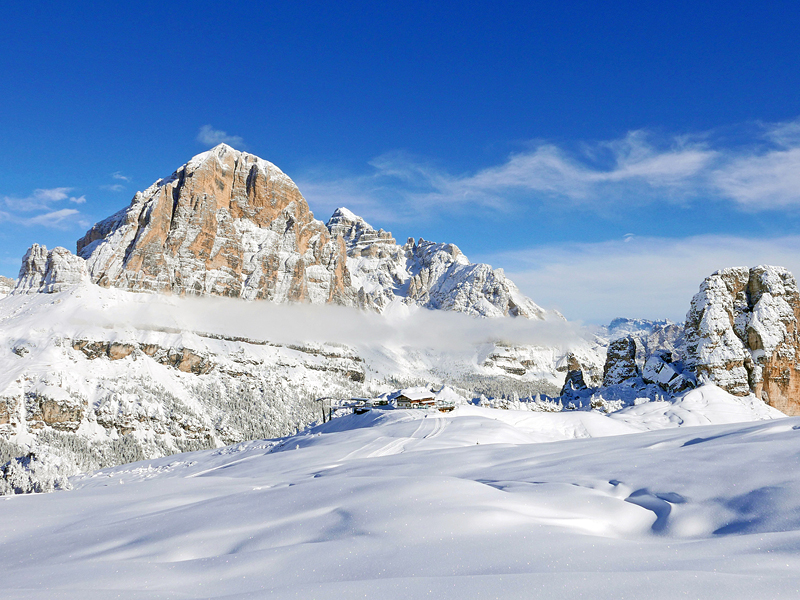
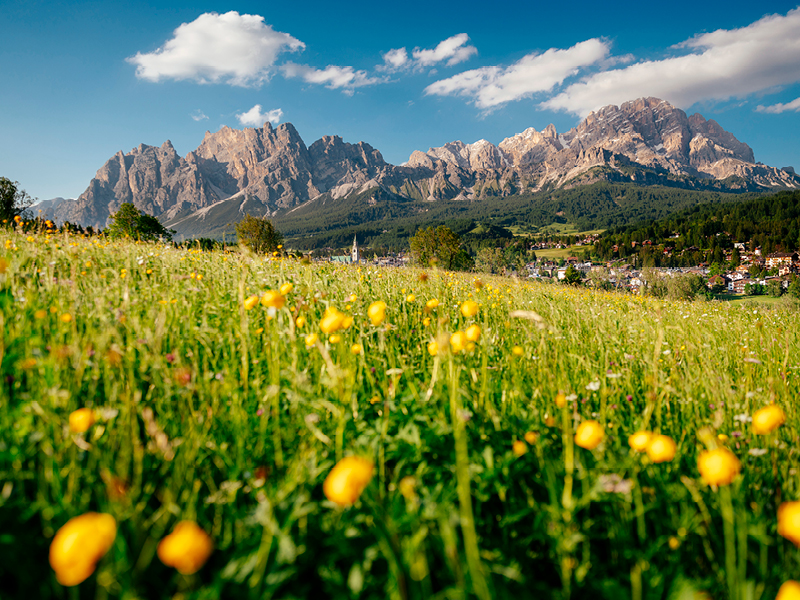
This is what most people who have been in the presence of these gigantic rock formations say. Compared to other mountains: brighter, more colorful, more monumental, and seeming to be architecturally inspired. Formed 200 millions years ago out of the primeval ocean, today they reach 3,000 metres into the sky. Déodat de Dolomieu (1750-1801) discovered and defined the unique composition of the stone, giving the mountains their name. Now they are among the UNESCO nominees for consideration as natural heritage sites.
Cycling routes to please everybody!
In the Dolomites the cycling possibilities are manifold and quite suited to all needs and for every technical level. Cortina Bike is variety. Besides the mountain bike routes for daring sportsmen, for bikers who are looking for the opportunity to put themselves to the test, you can find the Dolomite Cycle Path: a long hiking and cycling trail route which follows the itinerary of the former railway track, known to the enthusiasts as “Ferrovia”, which nowadays has been paved, improved and fitted with illuminated tunnel-tracts Read more...
What is a via ferrata
"It is a series of artificial fixings, metal ropes, iron ladders and rungs that make it possible to climb a rock wall." (Sepp Schnürer)
The first "vie ferrate" were built during World War I, until the end of 1917, whilst the Austrians and the Italians were fighting a ferocious war in the mountains of the Dolomites, in order to aid the movement of mountain infantry at high altitude. Recently this wartime network of "iron ways" has been carefully restored and many new routes added. Read more...
UNESCO declares the DOLOMITES a “Natural World Heritage Site”
On 26th June 2009, UNESCO included these calcite mountains located in northeastern Italy on its list of the most beautiful landscapes in the world. Read more...