Dolomiti.org >
Italiano | Deutsch


Eastern Dolomites
The Dolomites in the Veneto Region (north of Venice - province of Belluno)
Maps of the area
How to get there
Book your Holiday
SEARCH AND BOOK

When you find this symbol it means that the accommodation can be booked directly online.

Valleys and resorts
Cortina d'Ampezzo
Lagazuoi/5Torri Area
Faloria/Cristallo Area
Auronzo di Cadore and Misurina
Cadore: San Vito, Borca, Vodo, Cibiana
Falcade
Val Zoldana - Zoldo Alto
Tourist information
To keep in contact with the Tourist Boards of Belluno Province
www.belledolomiti.it
"Consorzio Dolomiti" head office
About Dolomites
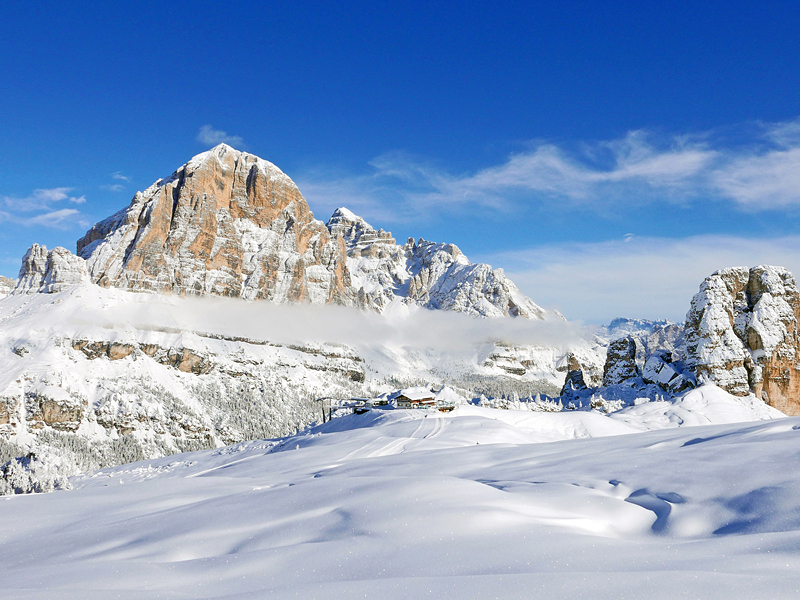
This is what most people who have been in the presence of these gigantic rock formations say. Compared to other mountains: brighter, more colorful, more monumental, and seeming to be architecturally inspired. Formed 200 millions years ago out of the primeval ocean, today they reach 3,000 metres into the sky. Déodat de Dolomieu (1750-1801) discovered and defined the unique composition of the stone, giving the mountains their name. Now they are among the UNESCO nominees for consideration as natural heritage sites.
Dolomia, a particular type of rock
The Dolomites owe their name to the Frenchman Déodat Tancrè de Gratet de Dolomieu (1750- 1801) who "discovered" the chemical composition (stratified calcium magnesium carbonate) that renders this rock so different from all the rest. A nobleman and member of the French Institute, Dolomieu was also a geologist.

In 1789 Dolomieu collected rock samples and sent these to the geologist Nicholas de Saussure for examination. He had been intrigued by the rock's abnormal reaction to chloric acid, since it reacted less violently to this acid than other calcium based rocks.

He believed this to be an unknown mineral and his intuition was soon confirmed. Despite suggesting the name 'saussurite', the new mineral was classified as 'dolomia' in his honour. The name Dolomites was extended to the entire mountain region in 1864.

Vegetation at a high altitude
Plants

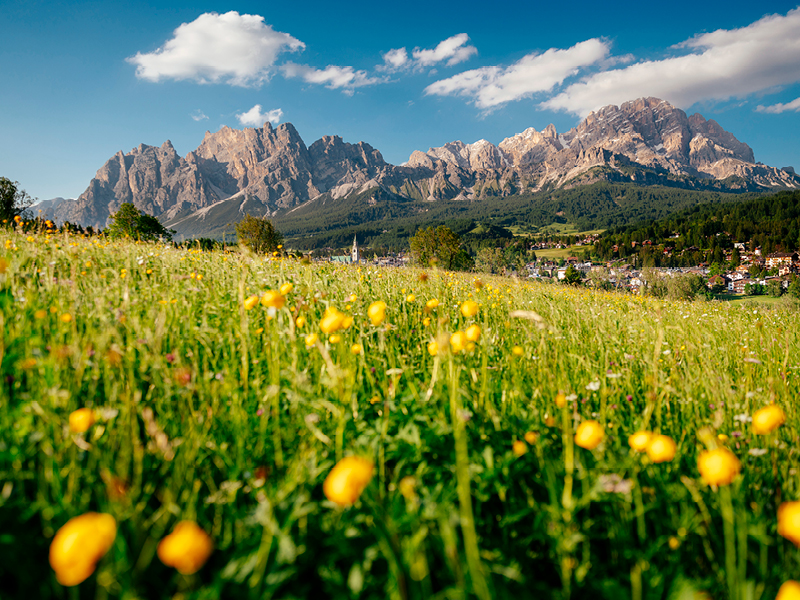
The rocky Dolomite garden contrasts starkly against the true garden of innumerable plants that cover the slopes in a bed of colours from the white rocks up high to the valley floor deep down below. More than 1500 different species create all tonalities of pine forest green, while the flowers bloom in a thousand different shades.

Vast and varied woods and forests are to be found in the Dolomites. An immense plant kingdom that ranges from the smallest mosses to the stone pine that grows at the highest altitudes. From the Swiss mountain pine, ruler of the highest regions where bushes predominate, to the red fir-tree, larch, Scotch fir and black pine. From beech to birch, willow, cedar and green alder. And from laburnum to maple, hornbeam, manna-ash and oak. All flourish here.

In spring one can witness an explosion of colours from the fifty different orchid species and thousands of flowers on high alpine pastures. Rich fruits of the forest abound, as do edelweiss and other solitary flowers in the rocks. There are also many endemical species, medicinal plants and fungi that only grow on Dolomite pastures such as the Alpe di Siusi plateau.

It is this immense, varied multicoloured garden that renders the Dolomites particular, and this wealth is owed above all to the variety of soils and rocks.

Fauna

Those who walk in the Dolomites know that long whistle all too well: the marmot's warning. They aren't hard to catch sight of, standing upright at their look-out points. And they can be seen more often than one imagines, above all early in the morning or at dusk. And one can even come across deer and stag, the king of the Dolomite forests.

Climbing higher one can catch an exciting fleeting glimpse of Alpine chamois and steinbock, true rulers of this steep rocky kingdom. Fortunately perhaps, a chance meeting with the rare brown bear is highly unlikely, but in recent years it has been sighted in certain areas.

There are plenty of other animals in the Dolomites, such as weasel, marten, hare and squirrel. And their skies are inhabited by partridge, which sharing the heights with the majestic and solitary eagle, raven and crow. In the forest lower down there are woodpeckers, wood grouse and owls, while an infinite number of multicoloured butterflies flutter curiously in woods and fields and trout populate whirling rivers.

Dolomites. A magic that has been repeating itself for millions of years. When day gives way to evening's first shadows, it casts an enchanting spell. Pink rock faces, like the colour of the legend. Like King Laurin's rose. And in that moment, in harmony between light and dark, nature's rays caress the peaks, needles, towers, bastions and ancient cliffs, kissing them like a dream, awakening emotions that warm both heart and memories. And then this wonder continues, through the moon's reflected white light, in waiting for the next flaming sunset.
Natural Parks
Parco Naturale delle Dolomiti d'Ampezzo
Province: Belluno -
Established: 1990 - Area: close to the Parco Naturale Fanes-Sennes-Braies, includes the mountains in the Val D'Ampezzo, from Passo Falzarego to Passo Tre Croci, including the Tofane, Val Travennanzes, Croda Rossa, Val Padeon and the area including Fòses, Leròsa, Cianco de Crosc, Ra Stua and Antruiles
Size: 11000 ha
www.dolomitiparco.com
Parco Naturale Fanes-Sennes-Braies
Province: Bolzano - Established: 1980 - Area: the area between Valle Pusteria, Val di San Cassiano, Val di Landro and the Parco Naturale Dolomiti d'Ampezzo. It includes the Alpi di Fanes, Lago di Braies, Sasso della Croce and Picco di Vallandro. - Size: 25680 ha
Parco Naturale delle Dolomiti di Sesto
Province: Bolzano -
Established: 1982 - Area: Val Pusteria, between Valle di Landro and Valle di Sesto, including Cima Undici, Croda dei Baranci, Tre Scarperi, Croda dei Toni and the north face of the Tre Cime di Lavaredo. -Size: 11650 ha
Parco Naturale delle Dolomiti Bellunesi
Province: Belluno -
Established: 1990 - Area: includes the area between Val Cismon and Valle del Piave, towards the Maè basin and the lower Agordino; includes Vette Feltrine, Monti del Sole, Gruppi dello Schiara and Talvena
Size: 32000 ha
Parco Naturale dello Sciliar
Province: Bolzano -
Established: 1974 - Area: Sciliar, Alpe di Ciapit, Tires, Siusi, Val Ciamin - Size: 6386 ha
Parco Naturale Puez - Odle
Province: Bolzano -
Established: 1978 - Area: Odles di Eroe, Funes, Sasso di Putia, Gardenaccia, Sassongher, Puez, Cir.
Size: 9400 ha
Parco Naturale Monte Corno
Province: Bolzano-
Area: between Val d'Adige, Val di Cembra, Sella di SanLugano and Chiusa di Salorno
Size: 6500 ha
Parco Naturale di Paneveggio - Pale di San Martino
Province: Trento -
Established: 1967 - Area: area to the south of the Lagorai and Pale di San Martino
Size: 19711 ha
Parco Naturale Adamello - Brenta
Province: Trento -
Established: 1988 - Area: Dolomiti del Brenta, Adamello - Size: 618 sq. km, of which 40000 hectares in the Brenta Dolomites
Parco Naturale delle Dolomiti Friulane
Province: Pordenone and Udine
Established: 1996
Area: Val Cellina, alta Valle del Tagliamento, Val Tramontina, Val Colvera including the Spalti di Toro, the Spalti di Monfalconi, Duranno, Cima dei Preti, and Pramaggiore.
Size: 36950 ha

Lakes

Lakes in the Lagazuoi-5 Torri area